


Knowing how to pack a dining room for moving is something most people seriously underestimate — until they are surrounded by stacked chairs, a disassembled table, and a china cabinet full of items they have not touched in years. The dining room may not be the most complicated room in the house, but it contains some of the most breakage-prone belongings you own: fine china, crystal stemware, serving platters, and heirloom pieces that simply cannot be replaced. Pack the dining room carelessly and you may arrive at your new home to find shattered dishes and a table that no longer sits level.
The good news is that the dining room can be packed efficiently and safely when you approach it in the right order. Declutter before you box anything, gather the correct supplies, and protect your most fragile pieces with dedicated wrapping techniques. This guide walks you through every step — from sorting the china cabinet to preparing your table and chairs for the truck — so your dining room arrives at your new home ready for your first meal together.
The dining room is one of the most rewarding rooms to declutter before a move. Most dining rooms quietly accumulate items that belong somewhere else entirely: stray paperwork, candles that have never been lit, serving pieces from a dinner party years ago, and extra sets of dishes that duplicate what is already in the kitchen. Moving those items wastes packing time, box space, and your energy on the other end.
Before you pull out a single box, walk through the dining room and sort everything into four categories:
Pay particular attention to your china cabinet. Many households hold two or even three full sets of dishes — an everyday set, a "good" set, and a holiday set — and only one of them gets used consistently. Moving all three is a significant packing burden. Decide now which sets you genuinely need to bring and which ones could find a better home before you leave.
Decluttering first means fewer fragile items to protect, fewer boxes to fill, and a cleaner unpacking experience at your new address.
The dining room demands a more specific set of packing supplies than almost any other room in the house. You are dealing with extremely fragile items — fine china, crystal, stemware — alongside heavy and bulky items like chairs, a table, and large serving bowls. Having the right materials before you begin is not optional; it is what stands between your heirloom china and a box of broken pieces.
Here is what to have ready before you start packing your dining room:
Dish pack boxes are worth purchasing even if you source free boxes elsewhere for other rooms. The double-walled construction absorbs far more shock in transit, and the investment is minor compared to replacing broken china or crystal.
The china cabinet is the centerpiece of the dining room packing challenge and deserves the most time, care, and supplies. Work through it systematically — one shelf at a time, one category at a time — rather than grabbing items at random.
Plates are far more likely to break when stacked flat than when packed on their edges. This surprises many people, but it is a well-established principle: plates packed vertically absorb the vibrations of a moving truck much more effectively than those lying horizontally, which can crack under the weight of items above them.
To pack plates correctly:
Never place heavy items on top of a box containing plates, and always mark the box clearly with both FRAGILE and THIS SIDE UP.
Glasses and stemware are the most vulnerable items in the dining room. The stems on wine glasses and goblets are particularly fragile — they can snap under relatively minor lateral force if not individually supported.
For glasses and stemware:
Fine china pieces — teacups, saucers, serving platters, covered tureens — should each be individually wrapped in packing paper, with a secondary layer of bubble wrap for anything you consider irreplaceable. Hollow pieces like teacups and gravy boats benefit from a small wad of crumpled packing paper stuffed inside the cavity before wrapping, which gives the piece an internal structure that resists crushing.
Pack china in dish pack boxes, interleaving layers with folded packing paper or foam sheets. Never stack serving platters directly against one another without a full wrap of paper between them.
If your silverware set came with a case or chest, pack it in that case and seal it with stretch wrap to keep the lid from opening in transit. If it did not, lay each piece in a bundle of packing paper and roll groups of four to six together, then place them in a small or medium box with no heavy items on top. Silver and silver-plate items can tarnish if they contact rubber bands, so use twist ties or packing tape rather than elastic to bundle sets.
Once the fragile dishware is packed, the remaining dining room items move quickly. Tablecloths, cloth napkins, and placemats fold flat and pack well in medium boxes — they can also serve as excellent padding around fragile items if space allows. Candlesticks should be wrapped individually in packing paper; taper candles can be bundled together in groups of four to six wrapped in paper to prevent them snapping in transit.
Table centerpieces, vases, and decorative bowls should be wrapped the same way as china — individually in packing paper with bubble wrap for anything fragile, packed upright in dish pack boxes or medium boxes with generous paper padding on all sides.
Lamp and buffet accessories — wine decanters, serving trays, decorative placards — should be treated as fragile regardless of appearance. Glass decanters in particular deserve their own dedicated wrapping and should never share a box with heavy items.
Dining furniture is among the most awkward category of items to move because of the combination of size, weight, and fragility of finished wood surfaces. Scratches and dents on a dining table are highly visible, and table legs — especially tapered legs on older furniture — can snap if the table is tilted or bumped carelessly.
If your dining table has removable leaves, take them out and wrap each one individually in furniture blankets, taping the blankets securely without letting tape touch the wood surface directly. For the main table top, protect the surface with furniture blankets or moving pads, secured with stretch wrap over the blanket — not the table itself.
Most dining tables have legs that can be removed for transport. If yours does, remove the legs, bag the hardware in a labeled zip-lock bag, and tape the bag to the underside of the table or to the leg itself so nothing gets separated. Wrapped table legs are far easier to load safely than an assembled table.
If the legs cannot be removed, pad the leg tips with foam or corner protectors to prevent scratching the truck floor and your new home's floors. Load the table on its side or upside down — depending on the design — never flat with legs pointing up, which puts stress on the leg joints during transit.
Dining chairs should be wrapped individually in furniture blankets or moving pads. Pay particular attention to the back uprights, leg tips, and any upholstered seat cushions. If the upholstery is light-colored or delicate, cover the seat with stretch wrap before the furniture blanket goes on to keep it clean in the truck.
Stack chairs seat-to-seat if the design allows — this is how moving crews typically load them to maximize space without risking damage to the legs. Never stack chairs with a hard surface pressing against a finished wood back or rail.
Empty all drawers and shelves completely before moving any large dining room furniture. Move drawer contents into labeled boxes. Tape or stretch-wrap drawers and doors closed so they do not swing open during the move. Wrap the entire piece in furniture blankets and secure with stretch wrap, again keeping tape off the wood finish itself.
Glass-fronted china cabinets deserve particular care. The glass panels — whether doors or side panels — should be covered with cardboard or foam board in addition to the furniture blanket. If a glass panel is removable, take it out, wrap it separately, and carry it flat rather than leaning it upright against the truck wall where it can vibrate and crack.
How you load the dining room matters just as much as how you pack it. Fragile dish pack boxes should never go on the truck floor under heavier boxes — they should be stacked on top of more stable, heavier loads and ideally wedged against the truck wall so they cannot tip. Mark every fragile box on all four sides and the top so anyone handling it knows what it contains.
Furniture loads first against the truck walls. The dining table and chairs go in early, before boxes, so they are secured and immovable. Box stacks then build up against and around the furniture. Dish pack boxes and anything marked FRAGILE get the last available shelf position — highest, with nothing on top of them.
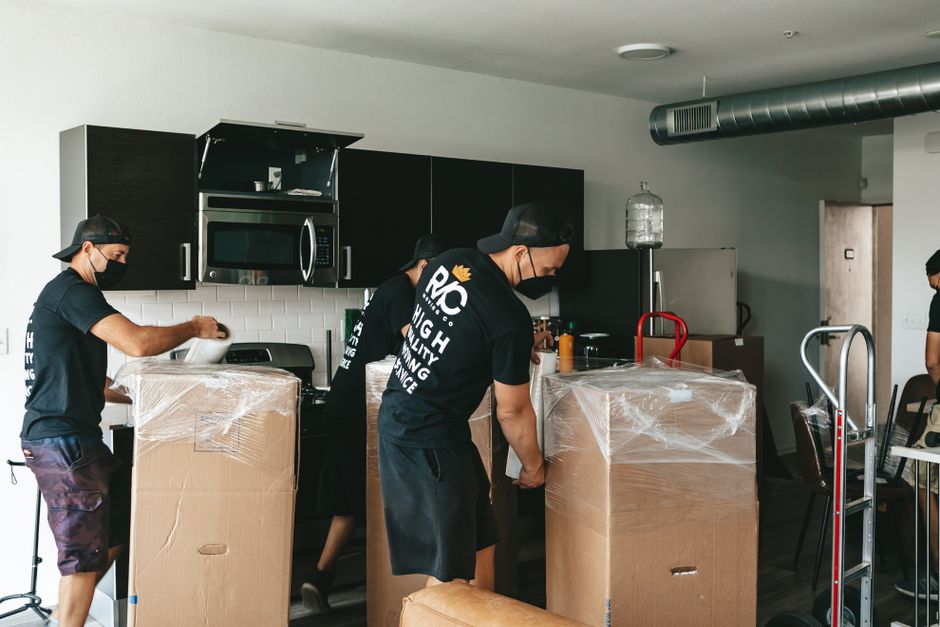
If you are working with professional movers, point out your fragile dining room boxes specifically during the load and ask that they be loaded last among the box stacks. A good moving crew will handle this instinctively, but flagging it directly is always worthwhile.
When you are ready to move your dining room and the rest of your home, working with experienced local movers can make the difference between a stressful moving day and a smooth one. Little Man Moves has helped families across the region pack, load, and transport their most valuable belongings safely.
Always pack plates on their edges — vertically — rather than flat. Plates stacked horizontally are more likely to crack because they bear the full weight of items above them and cannot absorb vibration as effectively. When packed vertically with generous packing paper between each wrapped plate, they handle the movement of a moving truck far better.
A dish pack box — sometimes called a dish barrel — is a double-walled, heavy-duty moving box specifically designed for fragile dishware and glassware. The extra wall thickness provides significantly more crush resistance than a standard box. For anything genuinely fragile — fine china, crystal stemware, heirloom pieces — dish pack boxes are worth purchasing even if you are sourcing free boxes for the rest of your move.
Use cell kit dividers inside a dish pack box so each glass has its own individual compartment. Before placing each glass in a cell, slide a foam pouch over it or wrap it in two to three sheets of packing paper, stuffing paper inside the glass as well as wrapping the outside. For stemmed glasses, add an extra layer of bubble wrap around the stem specifically. Pack glasses upright or upside down — never on their sides — with the most delicate stemware on the top row.
If the legs of your dining table are removable, taking them off before the move is strongly recommended. Removing the legs reduces the overall footprint of the table significantly, makes it easier to protect the table surface with furniture blankets, and eliminates the risk of leg joints being stressed or snapping during loading. Bag all hardware in a labeled zip-lock bag and tape it to the table or a leg so nothing gets lost in transit.
In addition to wrapping the entire cabinet in furniture blankets, cover glass door and side panels with an extra layer of cardboard or foam board cut to size before the blanket goes on. If the glass panels are removable, take them out, wrap them separately in furniture blankets, and carry them flat rather than leaning them upright where vibration can cause cracking. Never let tape contact glass directly — secure the protective layers with stretch wrap instead.
Always pack plates on their edges — vertically — rather than flat. Plates stacked horizontally are more likely to crack because they bear the full weight of items above them and cannot absorb vibration as effectively. When packed vertically with generous packing paper between each wrapped plate, they handle the movement of a moving truck far better.
A dish pack box — sometimes called a dish barrel — is a double-walled, heavy-duty moving box specifically designed for fragile dishware and glassware. The extra wall thickness provides significantly more crush resistance than a standard box. For anything genuinely fragile — fine china, crystal stemware, heirloom pieces — dish pack boxes are worth purchasing even if you are sourcing free boxes for the rest of your move.
Use cell kit dividers inside a dish pack box so each glass has its own individual compartment. Before placing each glass in a cell, slide a foam pouch over it or wrap it in two to three sheets of packing paper, stuffing paper inside the glass as well as wrapping the outside. For stemmed glasses, add an extra layer of bubble wrap around the stem specifically. Pack glasses upright or upside down — never on their sides — with the most delicate stemware on the top row.
If the legs of your dining table are removable, taking them off before the move is strongly recommended. Removing the legs reduces the overall footprint of the table significantly, makes it easier to protect the table surface with furniture blankets, and eliminates the risk of leg joints being stressed or snapping during loading. Bag all hardware in a labeled zip-lock bag and tape it to the table or a leg so nothing gets lost in transit.
In addition to wrapping the entire cabinet in furniture blankets, cover glass door and side panels with an extra layer of cardboard or foam board cut to size before the blanket goes on. If the glass panels are removable, take them out, wrap them separately in furniture blankets, and carry them flat rather than leaning them upright where vibration can cause cracking. Never let tape contact glass directly — secure the protective layers with stretch wrap instead.
.png)