
.png)

It's best to avoid laying a mirror flat during transport. Flat positioning lets other items shift onto the glass and lets the center of the mirror flex under weight, which is a common cause of cracks. Standing it on edge, secured and padded, distributes pressure much more safely.
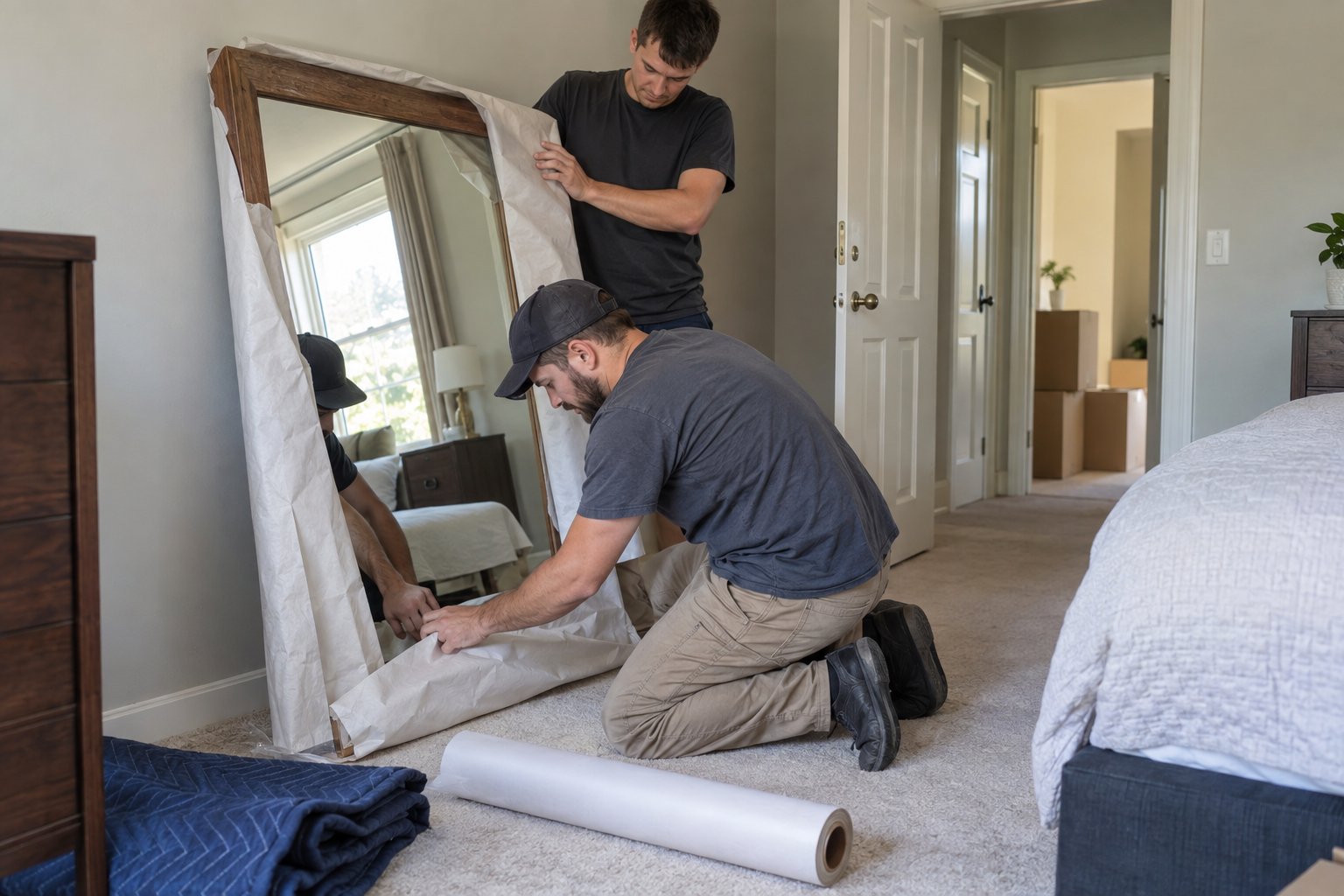
Two flattened cardboard boxes cut slightly larger than the mirror and taped around the edges work as a solid substitute for a mirror box. Pad the glass with packing paper or a blanket first, add corner protectors, then sandwich it between the cardboard sheets before taping it shut.
Bubble wrap can add a layer of cushioning, but it shouldn't be the only protection since it doesn't prevent the glass from flexing under pressure. Pair it with a rigid layer like cardboard or a mirror box, and avoid taping bubble wrap directly to the mirror's finish.
In a car, a mirror usually travels best upright between the front and back seats, padded and wedged so it can't slide, since trunks often don't offer enough stable support. In a moving truck, it should stand on edge near the front of the cargo area, strapped against a wall and cushioned by soft items on either side.
A smaller antique mirror can often be moved carefully by two people using standard padding and corner protection, but ornate or gilded frames chip easily even when the glass survives. For mirrors with significant value or fragile detailing, professional handling reduces the risk of damaging irreplaceable frame work.