


A moving day checklist only works if it is built around hours, not vague phases like "morning" and "afternoon." Knowing what to do between 7 a.m. and 8 a.m., then again between 8 a.m. and 10 a.m., keeps a move from sliding into chaos the moment the truck shows up late or a box turns up missing its label. This timeline breaks a local move into blocks you can actually follow, with a reason for each one.
Most local moves run somewhere around a half-day to a full day depending on home size and how much needs to be carried. Use the blocks below as a framework and adjust the clock to your own start time.
A flat task list tells you what to do but not when, so jobs pile up at the same hour and nothing gets prioritized. A timeline forces you to decide what has to happen before the truck arrives, what happens while it is being loaded, and what can wait until you are in the new place.
Think of the day in four blocks: final prep before arrival, loading, transit and arrival, and unloading and settling in. Each block has its own checklist, and mixing them up is where most delays start, like trying to finish packing a closet while the crew is already carrying out the dresser.
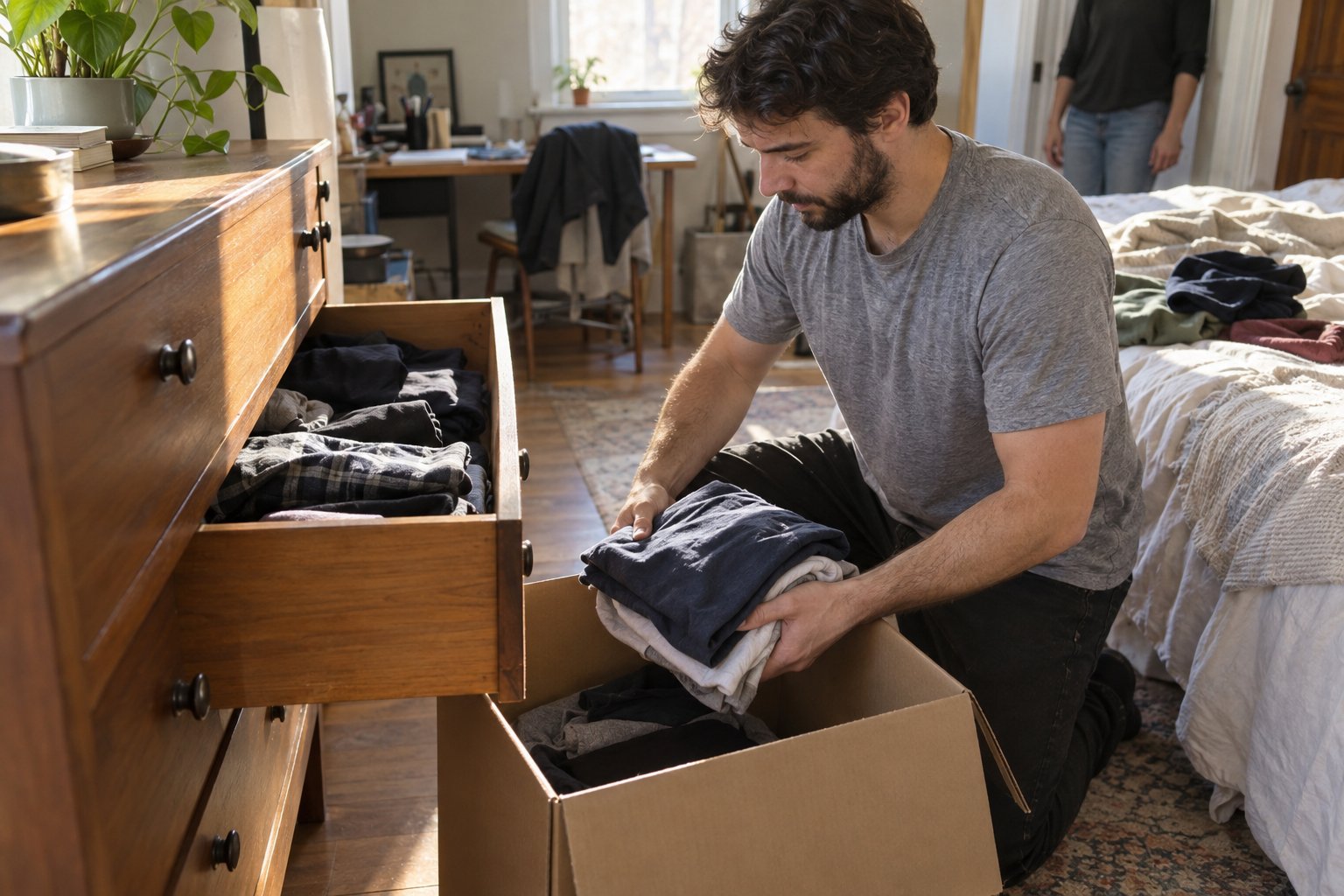
In the one to two hours before your scheduled arrival time, your only job is to make the home ready to load, not to keep packing. Everything that still needs a box should already be in one.
This block matters because every minute spent finishing packing after the crew arrives is a minute they are standing around instead of loading, which pushes every later block back.
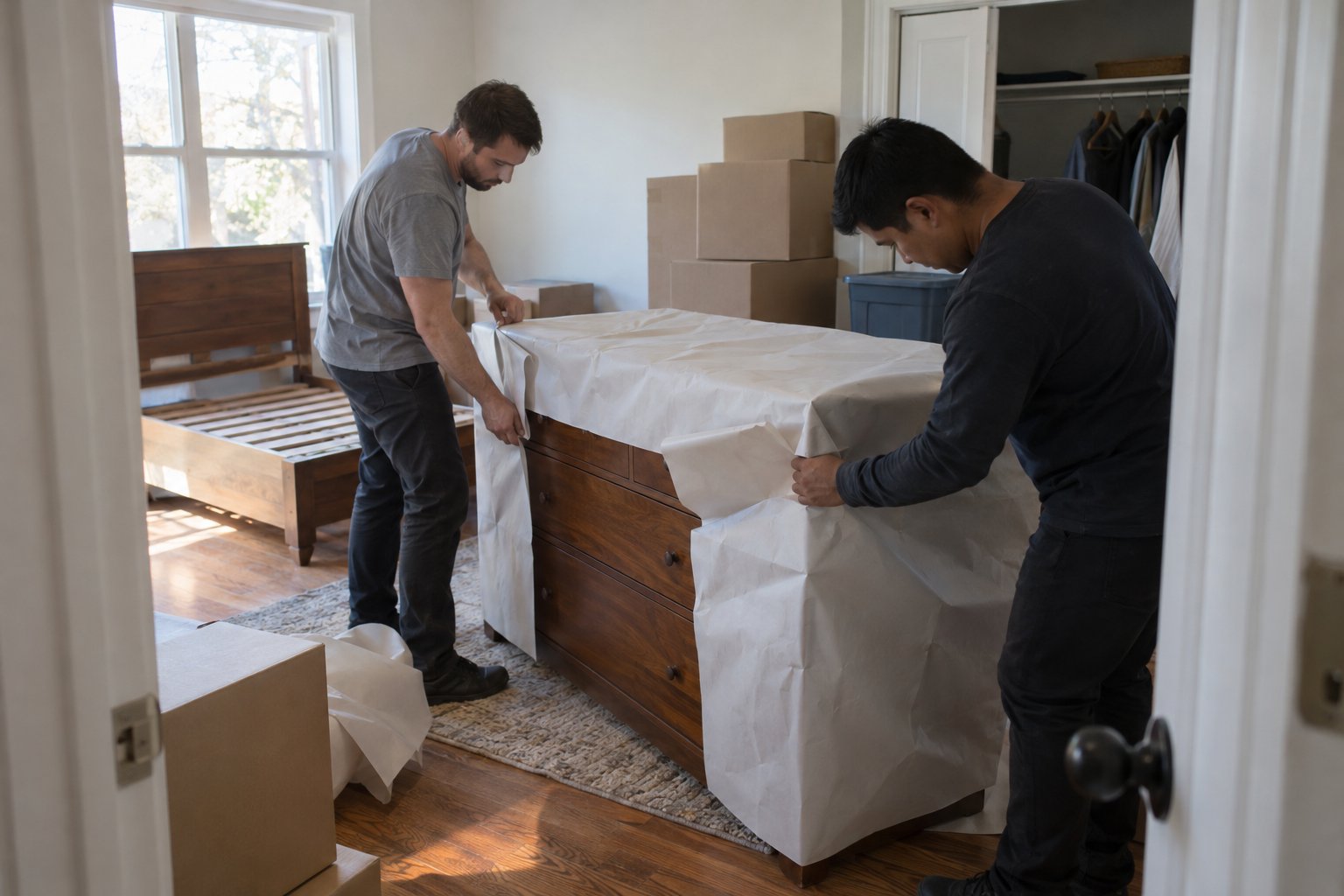
The first ten minutes after arrival should be a walk-through, not a straight start to loading. Point out fragile items, anything going into storage separately, and any furniture that needs to be taken apart.
A rule of thumb: budget roughly an hour of loading time per room of furniture and boxes, more for rooms with large or heavy pieces like a dresser or a dining set. That is an approximation, not a guarantee, since layout and stairs change it.
While the crew loads, your job is to stay available and keep the path clear, not to load boxes yourself. Being reachable matters more than being hands-on at this stage.
For a local move, the gap between the truck leaving your old address and arriving at the new one is usually short, but it is still worth planning for. Use it to get ahead rather than just waiting.
Unloading goes faster when you can tell the crew where each box and piece of furniture goes the moment it comes off the truck. A simple labeling system from earlier in the process pays off here.
If you took apart beds or tables before the move, reassembly generally takes less time than disassembly did, since you already know how the pieces fit together.
A few administrative tasks are easy to forget once the physical move is done, but they matter just as much to settling in cleanly.
If your move is local, from a St. George, UT home to a new address in Washington, UT, Santa Clara, UT, Ivins, UT, or Hurricane, UT, the same hour-by-hour structure applies regardless of the exact route between addresses. The one thing worth building into your timeline either way is traffic: try to avoid scheduling your loading start during school drop-off or commute hours if you have any flexibility in your start time.
If your new home has stairs, a narrow driveway, or tight parking, mention it when you book so the crew can plan for it rather than discovering it on arrival. For the loading and carrying itself, a local moving crew can work through this timeline with you, and packing help ahead of moving day reduces how much falls into that final one-to-two-hour prep block.
Most of a moving day checklist is really about what happens the day before and the morning of, but the items on it (first-night bag, utility shutoff locations, parking arrangements) should be decided at least a day ahead so the day itself is just execution.
Related reading: for the planning that happens in the weeks before moving day itself, see this site's guide to hiring movers and its box labeling system, which feeds directly into how fast the unloading block above goes.
Planning your move? Request a quote from Little Man Moves.
Toiletries, a change of clothes, basic medication, phone chargers, and any items you'll need before you've unpacked the rest of the house. Keep this box or bag with you rather than putting it on the truck.
Yes. Keep pets in one closed-off room, in a crate, or with another adult away from the home while the front door is open and people are carrying furniture in and out.
Point out any furniture that needs to be taken apart, anything fragile, items going into storage separately, and details about your home's layout like stairs or narrow doorways.
Start with the first-night box, then move to whichever room you need functional fastest, usually the bedroom and bathroom. A labeling system set up before the move makes this much faster.
Walk through and check major furniture and appliances for any damage while the crew is still there, so anything that needs attention can be addressed right away.