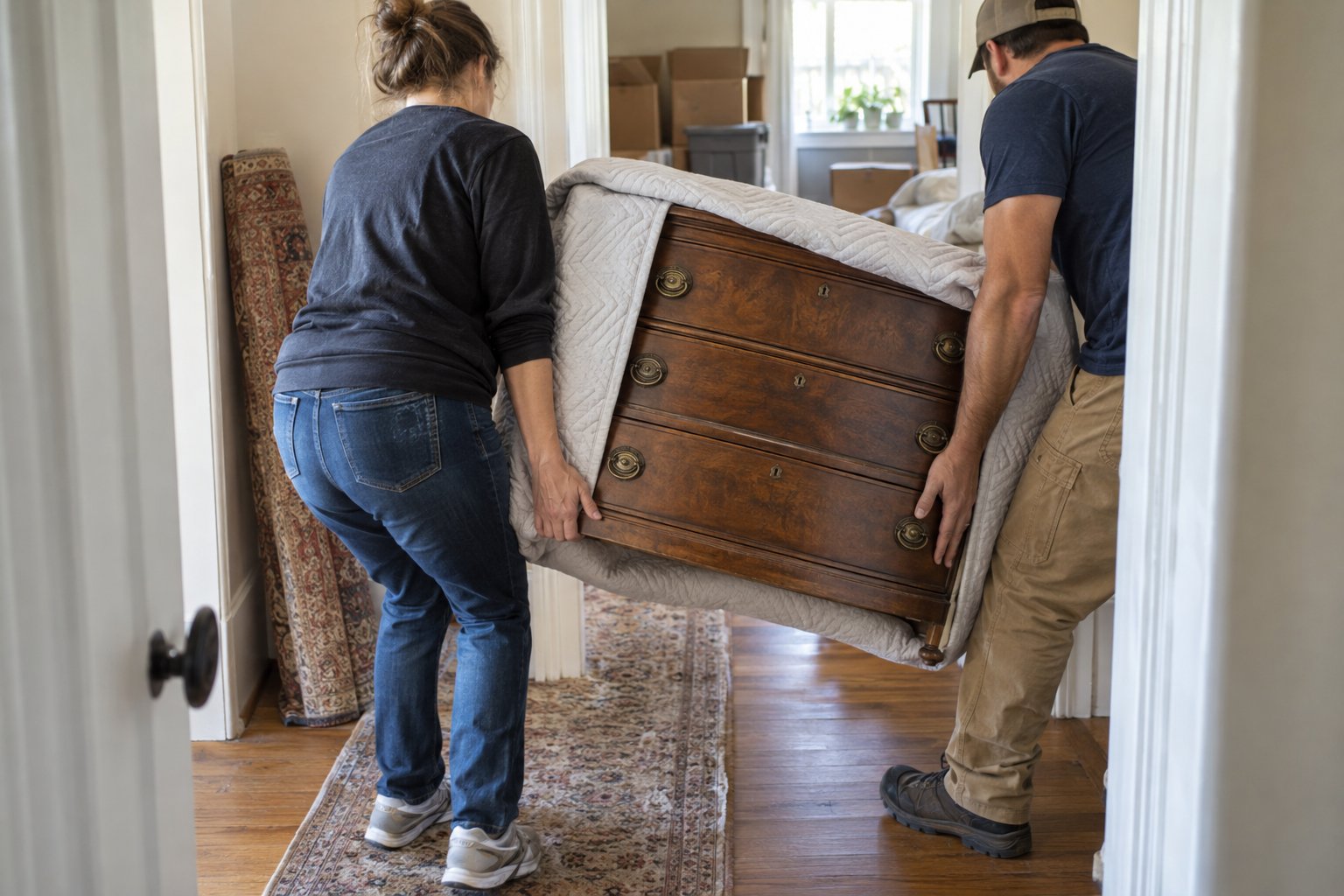



Check for loose joints, cracked legs, lifting veneer, or drawers that no longer sit flush. If a piece shows any of these signs, or if it's large, heavy, or irreplaceable, professional handling reduces the risk of further damage during transport.
Moving blankets or padded furniture pads protect finishes without trapping moisture the way plastic wrap can. Secure the padding with stretch wrap or painter's tape rather than standard tape, which can pull the finish when removed.
Removable legs, shelves, and glass panels should come off when possible, since separating pieces reduces strain on joints and makes the item easier to carry through doorways and stairwells. Leave disassembly of structural joints to someone experienced with the piece.
Inspect the piece for weak points at least a week before the move so you have time to source the right padding or arrange help. Waiting until moving day to discover a cracked leg or loose joint leaves no time to adjust the plan.
Point out any known weak spots, such as a wobbly leg or a sticking drawer, and mention which pieces are irreplaceable so the crew can prioritize padding and placement inside the truck accordingly.