
.png)

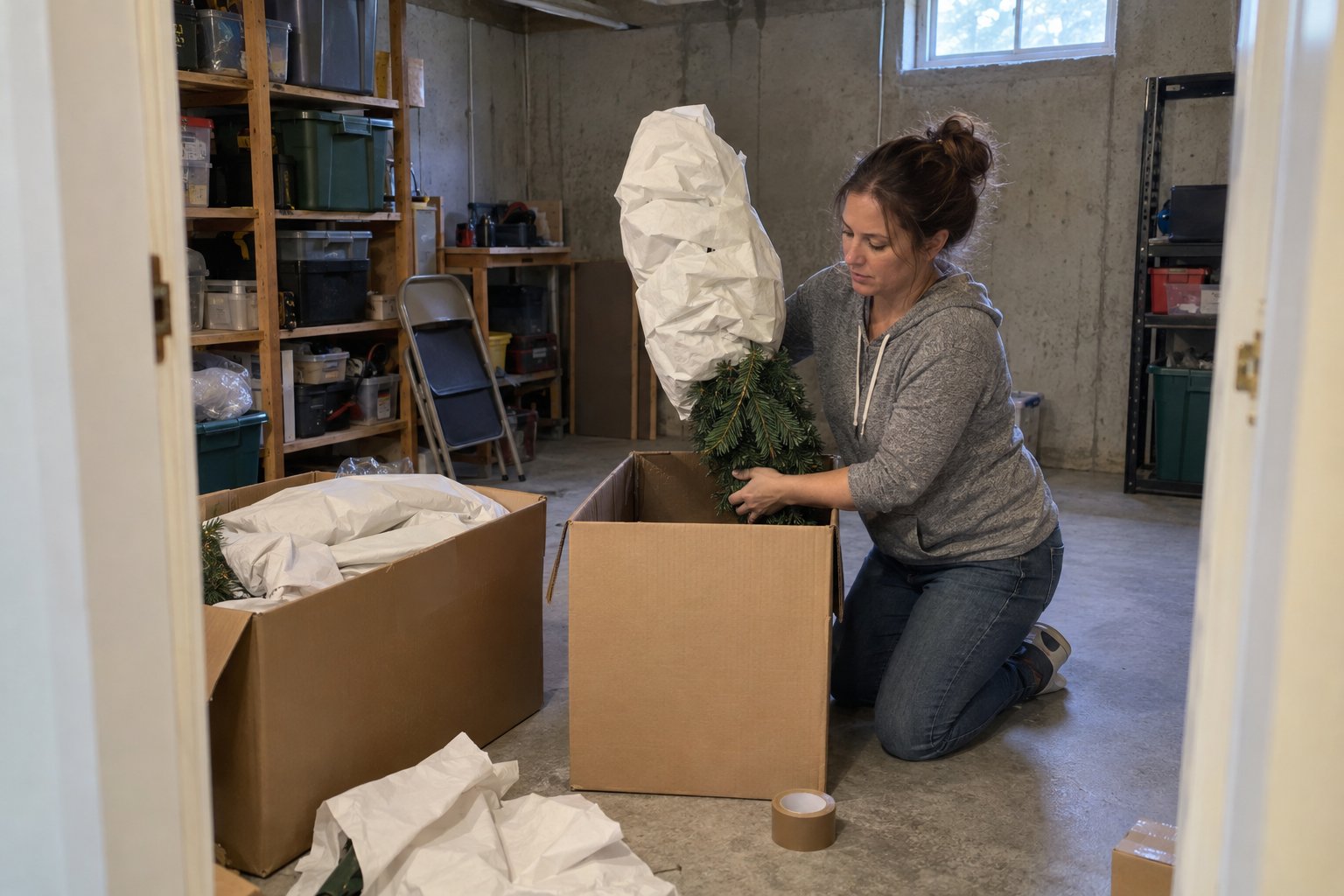
It's better to avoid storing an artificial tree fully flat for long periods, since constant pressure on the branches can bend the hinges and flatten the needle shape. If space is tight, a slim upright bag or standing the box on end against a wall preserves the branch shape much better than stacking it flat under other items.
Keep the tree off the ground on a shelf or pallet, store it in a sealed bag or box rather than an open bin, and avoid damp basements or garages where pests are more likely to nest. A few cedar blocks or sachets near the storage area can also help deter insects without damaging the tree materials.
If the tree is in good condition, especially a pre-lit model that still works, it's usually worth the box and padding to bring it along rather than replace it. A tree that's already missing branches, bulbs, or has yellowed needles may be a better candidate to replace after the move.
A cord reel, a wrapped section of cardboard, or a dedicated light storage box with built-in spools all work well to keep strands from tangling into a knot. Avoid tossing loose strands into a general decor bin, since that's the single biggest cause of damaged bulbs and hours of untangling the following year.
A climate-stable interior closet is generally better than an attic, since attics swing between extreme heat and cold that can warp plastic hinges and fade needle color over time. If closet space isn't available, a temperature-controlled storage unit is a safer choice than an uninsulated garage or attic.